What if the best solar system for your Sydney home isn’t the biggest one that fits on the roof? Solar power for Sydney homes works best when panels suit the roof’s orientation, shade and usable space, and generation lines up with when your household uses electricity.
If you’re weighing up roof suitability, bill impacts or whether to add a battery, start with the details of your property and energy use. Generic savings estimates can’t account for a particular roof, household routine or electricity plan.
This guide covers what to check before deciding: roof condition and shade, household electricity use, exporting power to the grid and battery planning. Gather a few details about your roof and energy use, then use them to support a tailored solar assessment from Brighter Sparks Electrical. The assessment can also consider relevant electrical upgrades your property may need.
Key Takeaways
- A roof that isn’t perfect may still be worth assessing. Note its condition, orientation, shaded areas and clear roof space.
- Solar panels supply power to your home first. Any surplus may be exported, while the grid can cover demand when generation is low.
- For solar power for Sydney homes, when you use electricity can matter as much as how much you use. Review your bills and feed-in plan to understand the role of exports.
- Gather roof photos, recent electricity bills and notes on your household’s daily routines to help inform a suitable system design.
- Brighter Sparks Electrical supplies and installs solar panels and batteries across Sydney, and can plan relevant electrical upgrades alongside a solar installation.
Is solar power suitable for your Sydney home? Start with the roof
Can a Sydney home suit solar if its roof isn’t ideal? It depends on the details. Several roof sections, some shade or limited clear space may still allow a workable design, but these conditions affect where panels fit and how much sunlight they receive. A tailored assessment considers the roof as a whole rather than treating one feature as an automatic yes or no.
Roof condition matters because panels are planned for the roof as it stands. Flag any damaged or ageing sections before design and installation planning. Usable area matters too: chimneys, skylights and other features can break up an otherwise large roof. Direction and angle influence sun exposure, while nearby trees and buildings may shade sections at particular times.
Sydney weather varies, and local surroundings shape the sunlight a roof receives. A leafy street, neighbouring building or changing shade through the day can make one property’s conditions quite different from another’s. For wider context on the country’s solar uptake and development, see Solar power in Australia. A site-specific design connects those broader conditions with the actual roof and household.
Roof suitability depends on the roof’s condition, useful sun exposure and a system design that fits your household’s needs.
What to check on a Sydney roof before planning solar
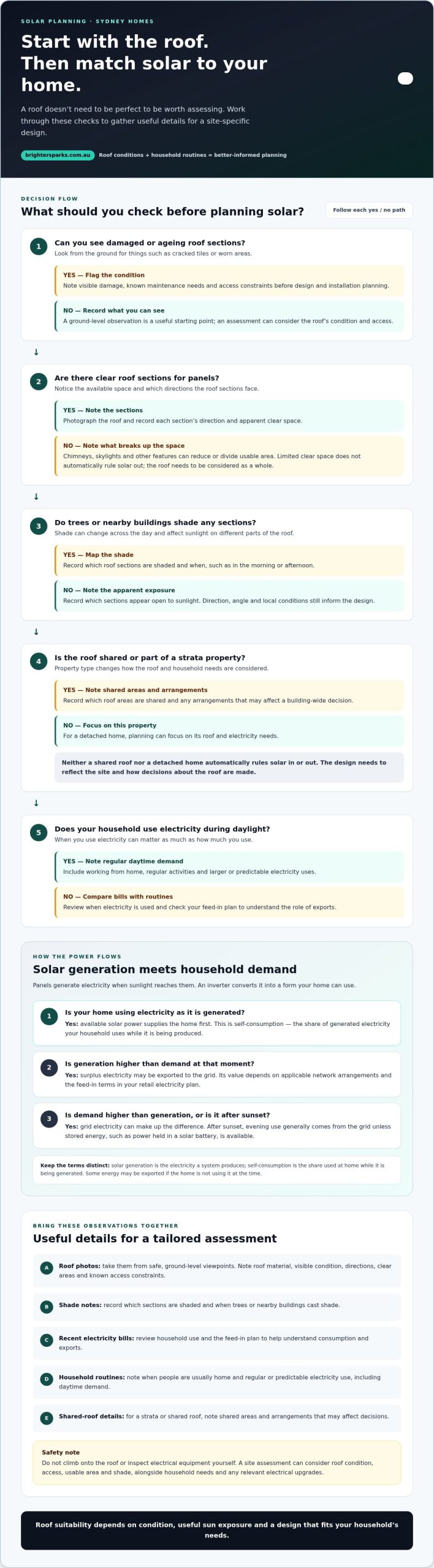
From the ground, note the roof material and any visible damage, such as cracked tiles or worn areas. Record access constraints and maintenance you already know is needed. Don’t climb onto the roof or inspect electrical equipment yourself.
- Photograph the roof from safe ground-level viewpoints.
- Note which roof sections face different directions and where clear space appears available.
- Record when trees or nearby buildings shade those sections, such as in the morning or afternoon.
These observations provide a useful starting point. A site assessment can establish how roof condition, access, usable area and shade affect the panel layout.
How property type and household use change the assessment
For a detached home, planning can focus on that property’s roof and electricity needs. A shared roof or strata property involves a different starting point: note which areas are shared and what arrangements may affect a building-wide decision. Neither property type automatically rules solar in or out. The design needs to reflect the site and how decisions about the roof are made.
Also note when people are usually home and which activities use the most electricity. Include regular daytime demand, such as working from home, and larger or predictable uses. These details help assess whether the available roof space and solar generation could line up with household routines. Brighter Sparks Electrical can use your observations as a starting point for a tailored solar assessment for solar power for Sydney homes.
How solar power works in Sydney homes: generation, use and export
Solar panels generate electricity when sunlight reaches them, and an inverter converts that electricity into a form your home can use. Household appliances draw on available solar power as they operate. If generation is higher than demand, surplus electricity may flow to the grid under the arrangements that apply to your property and electricity plan. If demand is higher than generation, grid electricity can make up the difference.
Solar generation is the electricity a system produces; self-consumption is the share your household uses at home while that electricity is being generated. The two figures aren’t interchangeable: a system can produce plenty over a day, yet some energy may be exported if the home isn’t using it at the time.
What happens to solar electricity as it is generated?
Self-consumption happens when your home uses solar electricity as it’s produced, for example, to run appliances during daylight hours. If panels generate more than the home needs at that moment, surplus may be exported to the grid. The value of those exports depends on the applicable network arrangements and the feed-in terms in your retail electricity plan.
Solar generation and household demand both change through the day. Cloud cover or a sudden increase in appliance use can mean the home draws some electricity from the grid, even while panels are generating. After sunset, panels no longer provide daytime supply. Evening use generally comes from the grid unless stored energy, such as power held in a solar battery, is available.
Why two Sydney homes can get different results
A citywide estimate can’t tell you exactly what a particular home will generate. Two Sydney roofs may differ in direction, available panel area, shade and the way a system can be designed around those conditions. A tree shading one roof section in the afternoon, for instance, may affect the design differently from an open roof with good sun exposure. Household use then affects how much generated electricity is consumed at home rather than exported.
Output also varies over time. Seasonal changes alter daylight hours and the sun’s path, while cloud cover can reduce the sunlight reaching panels. Nearby buildings, trees and other local features add another layer of variation. A useful estimate should reflect the roof, proposed system design and household rather than rely on one average for Sydney.
For solar power for Sydney homes, these details help turn a general estimate into a more useful planning discussion. Note when shade falls across the roof and compare that with the times your household uses electricity. A tailored assessment can bring roof conditions and expected household demand into the system design. Explore a tailored solar assessment as a practical next step.
Will solar suit your Sydney household? Weigh usage, exports and batteries
A useful question is not just how much electricity your home uses, but when it uses it. A household with people at home during the day may use more solar as it’s generated. If most electricity use happens after sunset, more daytime generation may be exported instead. That doesn’t make solar unsuitable, but it changes what to consider when planning a system.
Review recent electricity bills and, if available, smart meter interval data to see when your home draws power. Look for flexible activities that could run during daylight, such as using a dishwasher or washing machine, if that suits your routine. You don’t need to change your habits before assessing solar. The aim is to understand the patterns a system would be designed around.
| Household pattern | Planning question | Factors to assess |
|---|---|---|
| Regular daytime use | Can solar generation coincide with everyday demand? | Daytime consumption, roof conditions and appliance routines |
| Mostly evening use | How much power may be used at home versus exported? | Export terms, retail plan and options for shifting flexible use |
| Variable use or changing needs | Could future routines alter when electricity is needed? | Expected household changes and whether storage merits consideration |
How your daily routine affects solar self-consumption
Compare daytime and evening consumption rather than relying only on a total bill. If your retailer provides interval data, it can show when electricity is drawn from the grid. Note regular, flexible loads and whether they could run during solar generation without disrupting your household. This gives a more grounded basis for discussing system design and potential self-consumption than assuming every home follows the same daily pattern.
When to consider a battery or export arrangements
A battery stores some solar energy for later use, which may suit households that use more electricity after dark. It’s a separate decision, not a requirement for rooftop solar. Consider your goal, such as shifting energy to evening use or planning for backup, alongside your budget priorities and household timing. Compare this with how surplus exports are treated under your retail plan and applicable network arrangements. Feed-in tariffs and incentives can change, so verify current terms and eligibility before using figures in a decision.
Savings and payback depend on the home, system design, energy use and current tariffs. No household pattern guarantees a particular bill reduction. For solar power for Sydney homes, compare how a proposed design may align with your actual consumption and export arrangements. Brighter Sparks Electrical can tailor a solar assessment to your property and household use, with battery storage considered as a separate planning choice. Plan a tailored solar assessment around those details.
Your Sydney solar readiness checklist: details to gather before a design
A few notes before a tailored assessment can make the conversation more useful. You don’t need to measure the roof or inspect electrical equipment yourself. Gather what you can safely observe, then leave technical checks and design decisions to the assessment.
Information to prepare about your roof and electricity use
Work through this checklist, from property observations to household priorities. Photos taken from the ground are useful; avoid climbing onto the roof or opening electrical equipment.
- Photograph the roof from safe viewpoints. Capture visible roof sections and nearby trees or buildings that may cast shade. Note the roof material, its general direction and any visible damage.
- Record shade and maintenance needs. Note which areas appear shaded at different times of day, and flag any known roof repairs or maintenance. An assessment can determine how these conditions affect the proposed layout.
- Gather recent electricity bills. If available, include interval data from your retailer. Note regular daytime and evening use, plus major loads such as heating, cooling or cooking.
- Describe your household routine. Record when people are usually home and whether flexible activities could run during daylight. This helps relate proposed solar generation to likely household use.
- Note planned changes. List likely additions such as an electric vehicle charger, a heat pump or other household electrification. Future needs may affect system planning and relevant electrical upgrades.
- Set out your priorities. Consider whether your focus is using more solar at home, understanding exports, planning for future energy use or considering a battery later.
Questions a tailored solar design should resolve
Use your notes to guide the design discussion. A suitable proposal should account for usable roof area, shade, roof condition and other site conditions, then explain how the planned system’s generation relates to household use. It should also address how surplus electricity may be exported under the arrangements for your property.
Connection and export requirements can depend on the property’s location and network. Verify the current requirements that apply to your address, and check current NSW and Australian Government incentive details, including eligibility, before using them in your decision. These can change, so avoid relying on an old estimate or a general statement as if it applies to every home.
Consider system size alongside roof space, household consumption and export arrangements, rather than choosing from a generic rule of thumb. For solar power for Sydney homes, a property-specific design brings those details together. Brighter Sparks Electrical supplies and installs residential solar panels across Sydney, with relevant electrical upgrades planned alongside the installation where needed.
Once you’ve gathered roof observations, bills and priorities, arrange a tailored solar assessment to discuss a design suited to your property and household.
Plan solar power for your Sydney home with Brighter Sparks
A sound solar decision starts with the property, not a standard system size or generic savings estimate. Assess the roof and note its usable sections, orientation, condition and shade. Then consider when your household uses electricity, including regular daytime demand and evening routines. With those details in view, a tailored plan can account for the site rather than rely on assumptions about a typical Sydney home.
Brighter Sparks Electrical supplies and installs residential solar panels and solar batteries across Sydney. A solar assessment brings together roof observations, electricity use and project priorities. Where the property needs them, related electrical upgrades can also be considered as part of planning.
What a tailored solar plan should take into account
A useful design connects what you’ve observed on the roof with how your household uses power. Shade, roof layout and available space inform where panels may fit, while your bills and daily routines help show how generation might align with demand. Future plans matter too. If you’re considering an EV charger or other changes to household energy use, include them in the discussion so the design can account for your intended needs.
The assessment should also consider how generated electricity may be used at home and how surplus could be exported under the arrangements that apply to your property. If you’re considering a battery, treat it as a separate planning choice based on when you need energy and what you want storage to do. The right approach is specific to the home. Don’t assume a system size, bill outcome or payback period before the site and household have been assessed.
Take the next step for your Sydney home
Bring roof photos, recent electricity bills and notes about household routines and future plans to a tailored solar assessment. These details give the discussion a practical starting point. Brighter Sparks can plan solar installation around your property and consider relevant electrical upgrades where needed.
If you’re ready to move from general research to a property-specific plan, discuss a solar assessment for your home with Brighter Sparks. For a broader introduction to the topic, the guide Solar Panels in Sydney: A Practical Home Guide can help you revisit the basics before making your next decision. With solar power for Sydney homes, the sensible next step is to match roof conditions and household timing to a design suited to the site.
Turn your solar research into a considered next step
You don’t need every technical detail worked out before moving forward. Decide what you want a solar assessment to clarify: how the roof can be used, how a proposed system could fit your household’s plans, or what electrical work may need to be considered alongside it.
For solar power for Sydney homes, a tailored plan gives you a clear basis for deciding what suits your property without relying on a generic system recommendation or a promised financial outcome. Brighter Sparks supplies and installs residential solar panels across Sydney, with solar batteries and related electrical upgrades also available as part of clean-energy planning.
When you’re ready to turn your observations into a practical discussion, discuss solar power for your Sydney home with Brighter Sparks. A considered plan is a steady first step towards making the right choice for your household.
Frequently Asked Questions
How much solar power can a Sydney home generate?
There’s no single generation figure for every Sydney home. Output depends on the installed system, panel placement, roof exposure, shade and changing weather. A well-exposed roof and a shaded roof can produce different results even with similar systems. For a useful estimate, base the assessment on your address, roof layout and proposed design rather than a broad Sydney average. Actual generation also varies across seasons and from day to day.
Do solar panels work on cloudy days in Sydney?
Yes, solar panels can still generate electricity on cloudy days, but output is generally lower than in clear, sunny conditions because less sunlight reaches the panels. Heavy cloud can reduce generation further, so don’t expect the system to produce the same amount every day. When comparing a solar estimate with your bills, remember that weather affects supply, and the grid may still provide power when household demand exceeds solar generation.
Can solar panels power a home during a blackout?
Usually, a standard grid-connected solar system shuts down during a power outage, even if sunlight is available. This prevents electricity being sent into lines while workers may be repairing them. Backup power requires equipment designed and configured to operate safely during an outage, and not every solar or battery setup provides it. If keeping selected household circuits running is a priority, include that requirement when discussing a system so the design addresses it clearly.
What happens to excess solar power sent to the grid?
Surplus electricity exported to the grid may earn a feed-in credit on your electricity bill. The rate and terms depend on your retailer’s plan and applicable network arrangements, so the credit can differ between households. Check how your plan calculates exports and whether any conditions apply. Exported power is not the same as electricity stored for later use, and the credit may not match the price you pay to import power.
Do Sydney homeowners need council approval to install solar panels?
Not every installation requires a separate council approval, but the answer depends on the property and applicable planning controls. Heritage status, building type or other site constraints can affect what applies. Before proceeding, check the current NSW planning guidance and your local council’s requirements for your address. If you live in a strata building, rooftop work may also involve owners corporation processes, since the roof can be common property.
Are solar panels suitable for a Sydney home with a shaded roof?
They may be, but the amount and timing of shade matter. A chimney might shade a small section for part of the day, while a neighbouring building or tree could affect a larger area for longer. These conditions can influence the system layout and expected generation. Take ground-level photos at different times if safe to do so, and include them in a property-specific assessment. Don’t climb onto the roof to inspect it.
How often should solar panels be cleaned in Sydney?
There isn’t one cleaning schedule that suits every Sydney roof. Rain may wash away some dust, while nearby trees, bird droppings or construction can leave deposits that persist. Check for a noticeable, sustained change in system performance and look for visible dirt from a safe position on the ground. Avoid climbing onto the roof or using methods that could damage panels. If cleaning appears necessary, arrange it safely rather than taking risks yourself by consulting professional specialists like Horizon Solar & Exterior Care.