What happens between choosing a solar battery and using it at home? The solar battery installation process involves more than fitting equipment. Your property, electrical setup and connection arrangements all need to be considered. If you’re unsure about switchboard safety or how much work will happen around your home, knowing the usual steps can help.
Every property is different, but the main stages are similar. This guide explains what to expect at a Sydney home, from the initial site assessment through to installation, commissioning and handover.
You’ll learn what the installation team reviews, how connection arrangements fit into the plan and what happens before the system is ready to operate. You’ll also find practical ways to prepare for installation day and a checklist of information to keep after handover.
Key Takeaways
- The solar battery installation process typically moves through assessment, planning, installation, commissioning and handover, though the sequence can vary by property.
- Your existing electrical setup, proposed battery location and site access can all influence the installation plan.
- On installation day, the team prepares the site, positions the battery, completes electrical work and tests the system according to the agreed design.
- At handover, learn how to monitor and use your system, and keep the relevant installation documents for your records.
- Brighter Sparks Electrical Pty Ltd supplies and installs solar batteries across Sydney, planning each project around the property and its electrical setup.
What does the solar battery installation process involve?
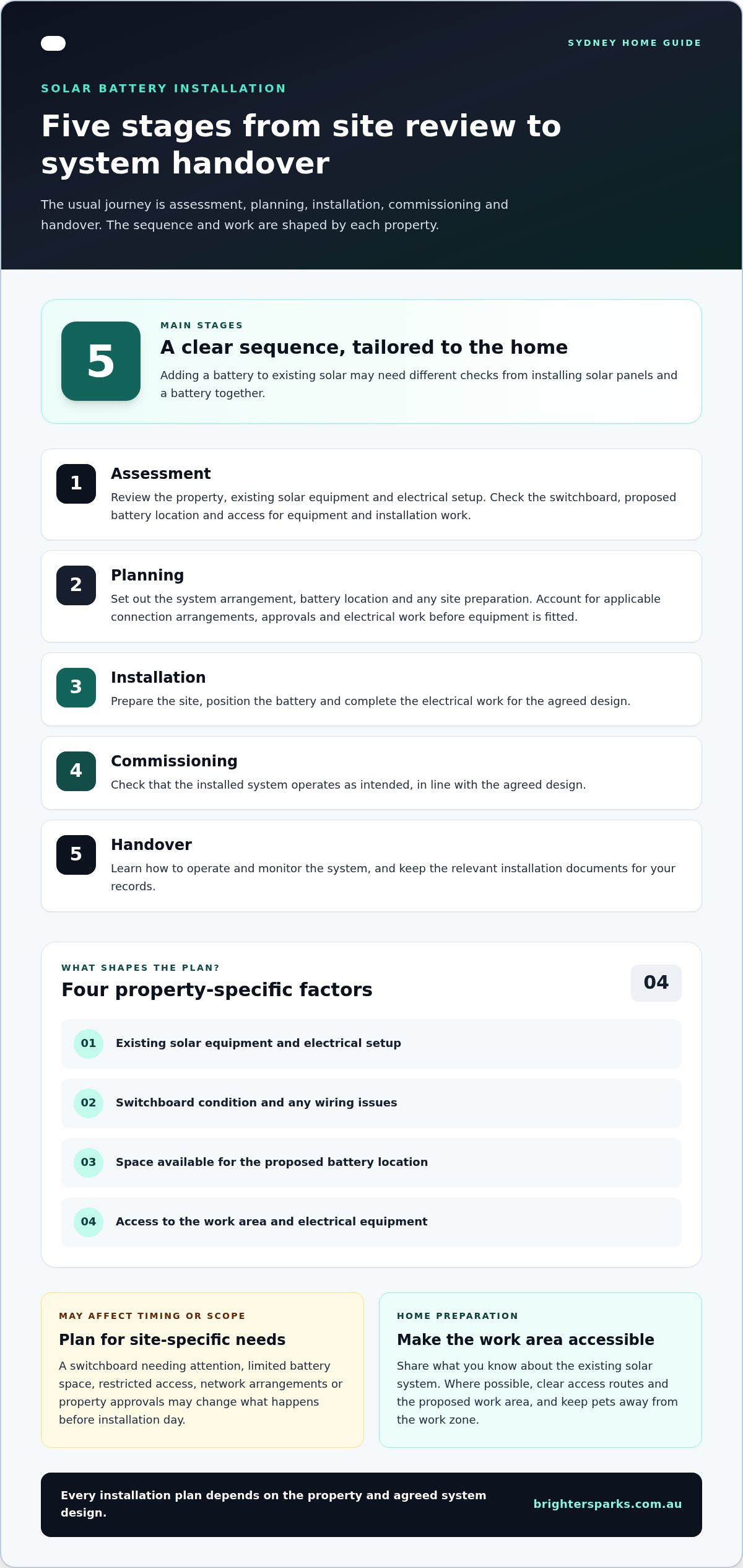
The solar battery installation process usually has five stages: assessment, planning, installation, commissioning and handover. This is a guide rather than a fixed sequence. A home adding a battery to existing solar panels may need different checks from a property having solar panels and a battery installed together. The existing inverter, switchboard, wiring and available space all help shape the work.
In broad terms, the stages are:
- Assessment: Review the property, current solar equipment and electrical setup.
- Planning: Set out the proposed system arrangement, battery location and any site preparation needed.
- Installation: Position and connect the equipment, completing the electrical work for the agreed design.
- Commissioning: Check that the installed system operates as intended.
- Handover: Explain system operation and monitoring, and provide relevant documents.
For a battery added to an existing solar system, the team first needs to understand how the panels and associated equipment are configured. A combined solar and battery project includes both in the overall design and installation plan. In either case, the specific work depends on the property and agreed system design. This guide focuses on the installation journey rather than battery sizing or product selection.
How a battery installation fits into a home energy project
A battery is part of the home’s wider solar and electrical setup, not a standalone appliance. Its connection needs to work with the existing or proposed solar equipment and the home’s electrical infrastructure. For a general overview of how solar panels, inverters and storage fit together, see Photovoltaic System Components and Installation. The site assessment establishes which parts of the setup affect the project plan.
What can change the installation sequence?
A switchboard that needs attention, limited space for the battery or restricted access to the work area can change what needs to happen before installation day. Network connection arrangements or property approvals may also apply, depending on the system and circumstances. These requirements are considered during project planning because they can affect the sequence and scope of work.
Homeowners can help by sharing information about the existing solar system, keeping the access route clear and making the proposed work area available for assessment. The installation team reviews the technical setup, plans the electrical connections and completes the installation and system checks. If the assessment identifies a switchboard or wiring issue, it can be factored into the project plan instead of becoming an unexpected task on the day.
The aim is to establish a clear sequence before equipment is fitted while allowing for property-specific needs. You can prepare the site and understand which technical tasks are part of the installation.
What happens before a solar battery is installed?
Before equipment arrives, the property and existing electrical setup are reviewed so the proposed work suits the home. Pre-installation generally follows a practical sequence: assess the site, plan the system, address any applicable requirements, then prepare the work area. If solar panels and storage are part of the same project, the plan needs to account for both. The solar panel installation planning guide covers the panel side of a combined project.
The solar battery installation process can differ from one home to another. Existing solar equipment, switchboard condition, the proposed battery location and access to the work area all influence what needs to be planned. An early review helps identify practical constraints and clarify the work included in the agreed project.
Site assessment: electrical setup, location and access
The assessment covers the switchboard and relevant electrical infrastructure, as well as the existing solar equipment if panels are already installed. The installer also reviews the proposed battery location and access for equipment and installation tasks. A narrow side passage, stored items or limited room near electrical equipment may affect site preparation. Identifying these constraints early helps shape a practical installation plan.
You can help by showing the team where the switchboard and solar equipment are, and sharing any useful information about the existing system. Where possible, keep access routes and the proposed work area clear. The installer handles the technical assessment and determines how the electrical setup and site conditions affect the plan.
Approvals and preparation before installation day
Connection and approval steps can vary according to the property, proposed system and network area. The project plan accounts for the requirements that apply to the installation, rather than assuming every Sydney home follows the same process. General resources can explain why permitting and compliance matter, but the Clean Energy States Alliance guide to permitting and compliance is not a source of NSW requirements.
Once the relevant project requirements are understood, preparation can include arranging access to the switchboard, existing solar equipment and planned battery location. Let the household know which areas need to stay clear, and keep pets away from the work zone. If the site review identifies an electrical issue or a change to the proposed location, the plan can be adjusted before equipment is fitted.
Brighter Sparks Electrical Pty Ltd supplies and installs solar battery systems across Sydney, with project planning tailored to the property and its electrical setup. If you’re considering a battery for your home, explore solar battery installation in Sydney.
What happens on solar battery installation day in Sydney?
On installation day, the team follows the agreed plan, from preparing the work area to connecting and testing the battery. The solar battery installation process is easier to follow when you know the likely sequence, but the exact tasks depend on your property, existing solar equipment and system design. There is no single timetable for every home, so avoid planning around a guaranteed finish time or assuming household power will remain available throughout.
The visit will generally move through these stages:
- Arrival and site check: The team reviews the work area and confirms it is ready for the planned tasks.
- Site preparation: The agreed access route and installation area are prepared, with care taken around nearby household spaces.
- Battery placement: The battery is positioned in the planned location, taking account of conditions on site.
- Electrical work: The installation team completes the connections required by the agreed system design.
- Testing: The installed system is checked before commissioning and handover.
A clear route to the planned battery location helps the team access the work area. If a stored item, obstruction or unexpected site condition gets in the way, the plan may need to change. Keep children and pets away from the active work zone, and follow the team’s access and safety instructions.
Battery placement and electrical connection
The team follows the planned battery location and system design while accounting for conditions found on site. Electrical connection work is completed as part of the installation. The precise work depends on how the battery is being integrated with the home’s solar and electrical setup. If the location or another part of the plan needs to change, the team explains the change and its effect on the work before proceeding.
What homeowners can expect while work is underway
Keep the agreed work areas and access routes clear during the visit. If the battery location is outdoors, rain or other weather conditions may affect work in that area. Site conditions can also reveal an issue that was not apparent during planning, so the sequence may shift. A clear conversation about any significant change helps you understand what is happening and what comes next.
Some electrical work may require a temporary interruption to household power. The timing and extent depend on the system and work involved, so don’t assume electricity will remain available throughout. Before work begins, understand which areas need to stay accessible and whether planned household activities could be affected. Leave the electrical work to the installation team.
Once installation and initial testing are complete, the next stage is commissioning and handover. The team explains how the system operates and what you need to know to use and monitor it. Keep the work area accessible until the team confirms installation tasks are finished.
How are a solar battery system’s commissioning and handover completed?
Installation isn’t the final step. Commissioning involves checks after the battery and associated electrical work are in place. The team checks the system configuration and operation against the agreed design, then explains what you need to know before using it. This stage helps you understand how the system is set up, not just that the equipment has been fitted.
The exact checks depend on the system and property. Any required network connection or metering steps also depend on the installation and applicable local requirements. Don’t assume the battery can operate in every mode as soon as installation work finishes. The team explains what applies to your system and whether any steps remain.
Checks and connection steps before the system is used
During commissioning, the installation team carries out functional checks and reviews the system configuration. They explain how the battery connects with your solar and electrical setup and whether any relevant connection or metering steps remain. The process reflects the requirements for the property and network area. If a further step affects when the system can operate, ask the team to explain what happens next.
Documents, monitoring and homeowner handover
Handover is your chance to learn the day-to-day basics. Ask for a practical demonstration of the system controls and monitoring access, including where to view relevant information and what normal operation looks like. Make sure you understand which instructions relate to your setup and where to find safety information later.
Keep the installation and product documents together in a place you can find easily. These may include system instructions, relevant electrical compliance records and information about the installed equipment. Clear records help you understand what was completed and provide useful context if the system needs attention in future.
Before the team leaves, use this short checklist:
- Controls: Can you access the system controls and monitoring information?
- Normal operation: Do you understand the basic operating information for your setup?
- Safety: Have you been shown the relevant safety guidance?
- Documents: Do you know which installation and product records to keep?
- Next steps: Are any connection or metering steps still required, and who is responsible for them?
A useful handover leaves you knowing how to use the system, where to find its records and whether any steps remain before operation. Brighter Sparks Electrical Pty Ltd supplies and installs solar battery systems across Sydney. Arrange solar battery installation in Sydney for a project planned around your property and electrical setup.
How Brighter Sparks supports solar battery installation in Sydney
A battery project needs to suit the home it’s being installed in. Brighter Sparks Electrical Pty Ltd supplies and installs solar battery systems across Sydney, planning work around the property and its existing electrical setup. Assessment, installation and handover clarify what needs to happen, while the project details are shaped by the home rather than assumed to be the same everywhere.
Whether you already have solar panels or are considering panels and storage together, the solar battery installation process starts with understanding the equipment and electrical infrastructure on site. That context informs the proposed battery location, electrical connections and any preparation needed. It also gives you a chance to understand the project stages before installation begins.
A practical installation pathway for Sydney properties
Brighter Sparks Electrical Pty Ltd works across Sydney on residential and commercial clean energy systems. Project planning considers the existing solar setup, switchboard and relevant wiring, as well as practical conditions at the property. If electrical work or a switchboard upgrade forms part of the project, it can be considered alongside the battery installation plan.
The sequence and scope depend on the property and agreed design. Assessment identifies the work area and access considerations; planning sets out how the battery fits with the home’s electrical setup; and installation is followed by checks and handover. Knowing these stages helps you prepare questions and understand where your input is useful, without assuming every home needs the same work.
What to have ready for an initial project discussion
A few notes about your home can make an initial conversation more focused. You don’t need to work out the technical design yourself. Describe what’s already installed and what you’d like to understand about the project.
- Existing solar: Note whether your home already has solar panels, and share any information you have about the current setup.
- How you use the property: Mention household routines or practical needs that may help frame the discussion.
- Possible battery location: Think about areas that may be suitable and any access constraints, such as a narrow path or stored items near the work area.
- Questions for handover: Write down what you want explained about system operation, monitoring access, safety information and documents.
These details help frame a conversation about how the project may fit your property. Assessment and planning provide a clearer basis for discussing the work, while commissioning and handover help you understand the installed system and the information to keep.
If you’re considering a battery for your Sydney property, discuss your solar battery installation project with Brighter Sparks Electrical Pty Ltd.
Take the next step towards a battery project that fits your home
Understanding the solar battery installation process gives you a clearer starting point, but the right plan depends on your property and electrical setup. Before moving ahead, consider what you want to understand first: the proposed battery location, existing wiring or what to expect at handover. A focused conversation can turn those questions into practical next steps.
Brighter Sparks supplies and installs solar battery systems across Sydney, with electrical wiring and switchboard upgrades available where they form part of the project. The plan is built around your home rather than assuming every installation follows the same path.
Ready to discuss your property and plans? Talk with Brighter Sparks about a solar battery installation in Sydney.
Frequently Asked Questions
Can a solar battery be added to an existing solar system?
Yes, a battery can often be added to an existing solar system, provided the equipment and electrical setup can support the proposed arrangement. The solar battery installation process begins by identifying the existing inverter and solar equipment, as these can affect how the battery connects. Have any system paperwork or equipment details handy if you have them. The installer uses this information alongside a property assessment to plan the work.
Will a solar battery keep my whole home running during a blackout?
Not necessarily. Backup during a blackout depends on the system design, its configuration and which circuits are set up to receive power. A battery installation doesn’t automatically mean every appliance or power point will keep working if the grid goes down. If blackout support matters to you, raise it during planning and ask which parts of your home are intended to remain powered. Don’t rely on assumptions about backup operation.
Do I need to be home during solar battery installation?
Whether you need to be home depends on access arrangements and the work planned at your property. Someone may need to provide entry to a locked garage, side passage or electrical room, or be available to discuss an unexpected site issue. Before installation day, organise access to the agreed work areas and confirm arrangements with the installation team. Make plans for children and pets to stay clear of the active work zone.
Can a solar battery be installed outdoors in Sydney?
An outdoor location may be suitable, depending on the battery’s installation requirements and conditions at the site. The proposed position needs to be assessed for factors such as weather exposure, available space and access for installation and future servicing. Sydney properties have different site conditions, so don’t assume an outdoor wall or yard is suitable without an assessment. The installer considers the location as part of the project plan.
Does a solar battery installation require a switchboard upgrade?
Not every installation requires a switchboard upgrade. It depends on the existing board, its condition and whether it can accommodate the electrical work required for the proposed system. An older board or a layout that needs changes may affect the scope of work. The switchboard is assessed during planning, so any required upgrade can be considered alongside the battery project rather than treated as an automatic requirement.
Can weather or site conditions delay solar battery installation?
Yes, weather or an unexpected site issue can affect the work, particularly when outdoor access or installation tasks are involved. Rain may make some external work impractical, while an obstructed access route or changed site conditions could require a revised plan. Keep the agreed work area clear and allow some flexibility in your household schedule. If conditions significantly affect the planned tasks, the team explains the change.
When can I start using a solar battery after installation?
You can use the battery once installation checks are complete and any required connection or metering steps for your system have been addressed. Timing depends on the system and applicable local arrangements, so installation finishing doesn’t always mean it’s ready to operate straight away. At handover, ask the team to explain the system’s status, how to access its controls and monitoring, and whether any further steps remain before use.