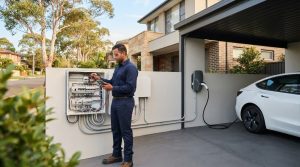
What if the lowest solar battery cost Sydney quote isn’t the best value for your home? A headline price can leave out equipment, electrical work or backup features your property needs. Quotes can be difficult to compare when battery capacity, system design and inclusions vary.
A useful quote starts with your household’s energy use, how much solar you export and whether you want backup power. This guide explains the main factors behind an installed battery quote, how to compare systems on a like-for-like basis, and what information to prepare when requesting a tailored quote. It also covers how incentives may affect your costs, since eligibility and programme terms depend on your circumstances.
You’ll learn what to look for in battery capacity, inverter compatibility and installation work, including possible changes to your electrical setup. Brighter Sparks Electrical supplies and installs solar batteries across Sydney, tailoring each system to the home and its energy needs. By the end, you’ll have a practical way to assess your options before committing.
Key Takeaways
- See why an advertised battery-only figure may not reflect the full scope of an installed system at your home.
- Compare capacity, usable energy, power output and backup capability as separate factors when reviewing options.
- Use the same household needs and installation assumptions to compare solar battery cost Sydney quotes fairly.
- Check the current incentive scheme and your eligibility before relying on a discount or estimated bill savings.
- Gather recent electricity bills, solar system details, switchboard photos and backup priorities to help shape a tailored quote.
Solar battery cost in Sydney: what makes one quote different from another?
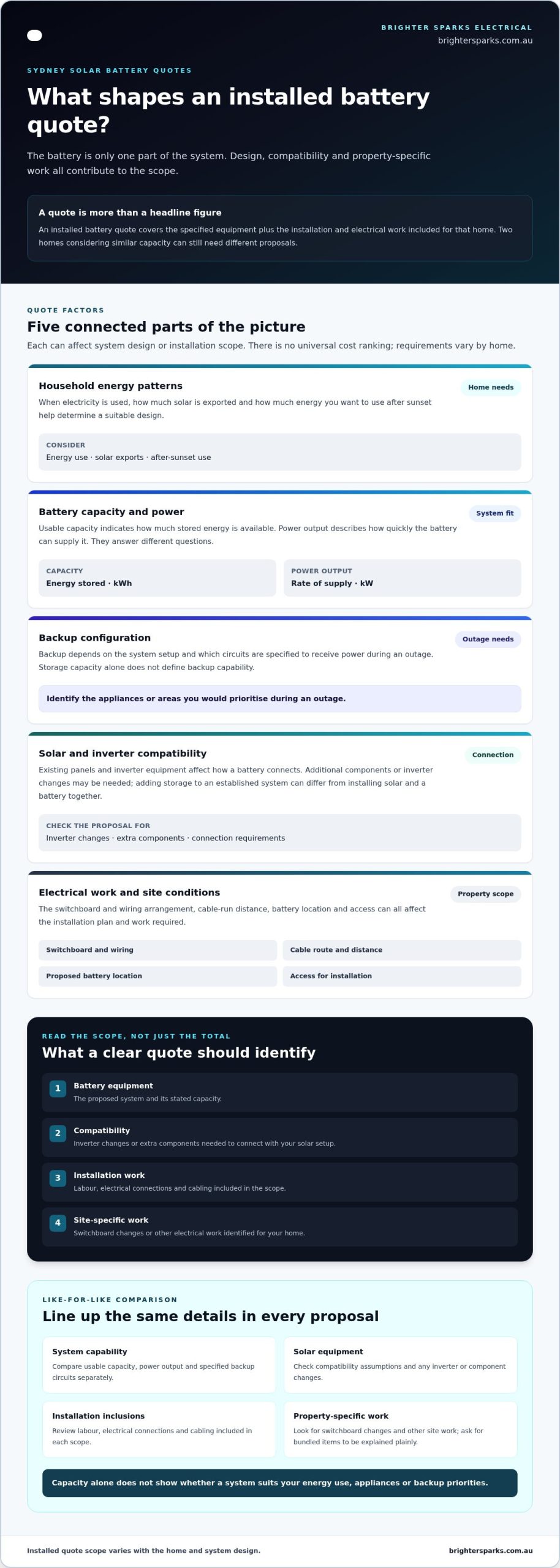
An advertised battery-only figure describes equipment, but not necessarily the work needed to install it at your home. A tailored quote accounts for the battery configuration, compatibility with your existing or planned solar equipment, electrical work and site conditions. That’s why two Sydney homes considering similar battery capacity can receive different proposals.
An installed battery quote is the cost of the specified battery equipment plus the installation and electrical work included for that property. Read the scope alongside the figure. A low headline price may not cover the same components or work as a more detailed proposal.
Your household’s energy use and backup priorities also shape the proposed configuration. A home aiming to use more of its own solar after sunset may have different needs from one prioritising backup for selected household loads. Battery storage systems vary in how they store and supply energy; Understanding Battery Storage Technology offers a general overview of the technology. Capacity alone doesn’t tell you whether a system suits your intended use.
Which parts of a Sydney battery quote should be itemised?
Look for a clear breakdown of the battery equipment, inverter or compatibility work, installation labour and electrical components. If the proposal includes switchboard changes, additional cabling or other property-specific work, those items should be identified rather than bundled into a vague installation description.
- Battery equipment: the proposed system and its stated capacity.
- Compatibility: any inverter changes or additional components required to connect it with your solar setup.
- Installation work: labour, electrical connections and cabling included in the scope.
- Site-specific work: switchboard changes or other electrical work identified for your home.
Inclusions vary with the property and system design, so don’t assume every quote describes a universal package. If an item is grouped under a general heading, ask for its scope to be explained in plain language before comparing totals.
Why do two Sydney homes receive different quotes?
One home may already have solar equipment that can work with the proposed battery. Another may need additional electrical components or changes to make the system compatible. The switchboard and wiring arrangement can also affect the work required, which means the battery itself is only one part of the quote.
Installation conditions matter, too. The proposed battery location, cable route and access for carrying out the work can affect the installation plan. These details are specific to the home, rather than fixed add-ons that apply to every Sydney property.
Finally, match the proposed capacity to the household’s use and priorities. A larger battery isn’t automatically a better fit if the home can’t make practical use of its stored energy or backup needs are modest. Consider when electricity is used, how much solar is available to store and what you want supported during an outage. This gives you a more meaningful basis for judging the proposed system than capacity alone.
What affects the installed cost of a solar battery in Sydney?
The battery is only one part of the system design. Its usable storage, power output and backup setup need to suit your solar equipment, household energy patterns and property. For a useful solar battery cost Sydney estimate, consider each specification alongside the work required to connect and install the system.
Battery capacity, measured in kilowatt-hours (kWh), describes how much energy it can store; power output, measured in kilowatts (kW), describes how quickly it can supply that energy. They’re related, but answer different questions. A household might have enough stored energy for evening use but still need to check whether the system’s output suits the appliances it plans to run at the same time.
How battery size and capability shape a quote
Usable capacity indicates how much stored solar energy is available for use later. To assess the fit, consider when your household uses electricity, how much solar it typically exports, and how much of that energy you’d like to use after sunset. The aim is to match storage to your consumption patterns, not simply choose the largest capacity on offer.
Power output and backup capability add separate design considerations. Backup depends on the system configuration and which circuits are specified to receive power during an outage. It doesn’t follow from storage capacity alone. Identify the appliances or areas you’d prioritise, then compare proposals based on how they address those needs. A tailored design can align capacity, output and backup priorities without assuming one setup suits every home.
How existing solar and electrical infrastructure affect scope
Existing solar panels and inverter equipment can influence how a battery connects. Compatibility needs to be assessed as part of the system design, including whether additional components are required. A home adding storage to an established solar setup may have different requirements from one installing solar and a battery together.
The electrical layout matters too. The condition and arrangement of the switchboard, cable-run distance, proposed battery location and access to that area can all affect the work involved. For example, a location requiring a longer cable route may call for a different installation scope from one close to the relevant equipment. These are factors to assess, not automatic additions to every quote.
Sydney homes vary in layout and existing electrical setup, so a site-specific assessment is more useful than assuming extra work will always be needed. Brighter Sparks Electrical supplies and installs solar batteries, tailoring the work to the property and its electrical setup. To discuss a tailored solar battery installation, consider your home’s solar, usage and backup priorities.
How to compare solar battery quotes in Sydney without comparing headline figures
A fair comparison starts with the same household priorities and assumptions in each proposal. If one quote is designed for evening solar use and another includes backup for selected circuits, their totals don’t describe the same system. To assess solar battery cost Sydney options properly, compare what each system is intended to do and what work is included.
Which specifications matter when comparing battery systems?
Record usable energy, continuous power and backup operation separately. Usable energy indicates how much stored energy is available; power indicates how quickly it can be supplied; backup details explain what the system is designed to support during an outage. Then check how each proposal integrates with your existing or planned solar equipment and whether its features suit evening use, backup or greater solar self-consumption.
| Compare | What to record |
|---|---|
| Capacity | Battery capacity and usable energy, stated separately where available. |
| Power | Continuous power output, so you can compare how each system supplies energy. |
| Backup | Whether backup is included, and which circuits or loads the proposal specifies. |
| Compatibility | How the battery connects with existing or planned solar and inverter equipment. |
| Included work | Installation, electrical components, switchboard work, cabling and commissioning included in the scope. |
| Terms and support | Warranty conditions, monitoring arrangements and system support described in the proposal. |
Compare warranty terms, not just the word “warranty”. Check which equipment is covered, the stated conditions and any relevant limits. Likewise, note what monitoring and system support are actually included instead of assuming proposals offer the same arrangements.
What should a clear installation quote explain?
A useful proposal defines the equipment and installation work, including any electrical changes and commissioning scope. It should also state assumptions about access, existing solar equipment and compatibility, and identify exclusions. These details show whether differences between quotes reflect system choices, installation requirements or work that isn’t included.
Keep confirmed inclusions separate from estimated future bill savings. Savings depend on how your household uses energy, solar generation and electricity plan, so projections aren’t the same as specified equipment or installation work. Compare estimates using the same assumptions, and treat them as projections rather than guaranteed results.
Before weighing up totals, describe one consistent use case, such as prioritising evening consumption, backup for selected circuits or storing surplus solar for later. Use the same priorities and property details for each proposal. If a quote uses different assumptions, note the difference rather than treating its headline figure as directly comparable. This gives you a clearer view of the system and work behind each price.
Can NSW incentives and bill savings reduce your solar battery cost?
Potential incentives and lower grid use may affect the overall value of a battery, but they work differently. An eligible programme discount may reduce the upfront amount, while bill savings depend on how your system operates and your household’s energy habits. Neither should be assumed from a headline estimate alone. For a clearer view of solar battery cost Sydney, separate any upfront incentive from projected savings over time.
Use this sequence before comparing proposals:
- Check the current scheme. Review the latest information from the NSW Government and the Clean Energy Regulator.
- Confirm eligibility. Check the current programme rules, eligible systems and any installation or application requirements that apply to your circumstances.
- Compare quote assumptions. Check whether each proposal includes an incentive in its upfront figure, and whether it assumes the same eligibility and system configuration.
How to check current battery incentives in NSW
As at October 2026, the federal Cheaper Home Batteries Program provides a discount for eligible battery systems, with the rate tiered by usable capacity. NSW also has a Virtual Power Plant incentive for eligible batteries connected to a participating VPP, with the incentive amount set by the provider. Programme rules and eligibility can change, so use current official guidance rather than relying on an old advertisement or assuming every household qualifies.
Read the conditions for the specific programme and proposed system. Check which equipment and installation arrangements are eligible, how the incentive is applied, and whether the quote shows the amount before or after it. A quote should make its assumptions clear. Don’t treat an advertised incentive as a guaranteed reduction for your home.
How to assess potential savings without relying on promises
Bill savings aren’t the same as an upfront discount. They depend on how much stored solar energy your household uses instead of buying electricity, as well as your export patterns, tariff structure and the times you use power. A home with high evening consumption may use a battery differently from one that exports little surplus solar.
Use recent electricity bills, solar export information and your tariff details to understand your starting point. Then consider when household demand occurs and how much surplus solar is available to store. If a proposal includes a savings estimate, look at its assumptions, including expected battery use and electricity prices. Treat it as an estimate, not a promised result or fixed payback period.
For a property-specific quote that sets out the proposed battery system and installation scope, request a tailored Sydney solar battery quote from Brighter Sparks Electrical.
Get a tailored solar battery quote for your Sydney home
A useful quote starts with how your household uses energy and the electrical setup already in place. Brighter Sparks Electrical supplies and installs solar batteries across Sydney, tailoring the proposed system and installation scope to the property. Sharing a few details upfront helps make the assessment relevant to your home instead of relying on a generic system assumption.
What information helps prepare a useful battery quote?
Gather the details you have available. You don’t need to calculate the right battery size yourself. Recent bills and information about your solar system can help show your household’s energy use and existing setup.
- Recent electricity bills: These show your usage and tariff information. Note when your household tends to use the most electricity, such as during the evening.
- Solar system details: Share available information about your panels and inverter, along with a general sense of how much solar energy you export, if you have it.
- Switchboard photos: Clear photos can help show the existing electrical setup. Avoid removing covers or touching electrical equipment.
- Backup priorities: If backup during an outage matters to you, list the essential circuits or appliances you’d want the system to support.
Even incomplete information is a useful starting point. Describe your priorities and what’s already installed, rather than trying to specify technical requirements without an assessment.
What happens after you request a tailored quote?
Your home, existing solar equipment and electrical installation requirements are assessed to shape a suitable system and scope of work. This includes considering how the proposed battery fits your household’s energy use and backup priorities, as well as the property’s electrical setup. If you’re also planning solar panels, they can be considered as part of the broader system plan.
The resulting proposal sets out the proposed equipment and installation work for your property. Review it against the information you supplied: does it reflect your usage patterns, solar setup and backup needs? A site-specific scope clarifies what the solar battery cost Sydney quote covers and gives you a sound basis for deciding whether the proposal fits.
Ready to discuss your home’s setup and priorities? Request a tailored solar battery quote in Sydney from Brighter Sparks Electrical.
Take the next step towards a battery plan that fits
Your energy needs can change as household routines, appliances and solar plans evolve. Use your quote to explain what matters now and what you may want the system to support later. That context makes a solar battery cost Sydney proposal more relevant to your home than a decision based on a figure alone.
If a battery is one part of a broader upgrade, Brighter Sparks Electrical also provides solar panel installation and electrical upgrade services. Sharing your plans helps keep the proposed scope connected to your property and priorities.
Ready to discuss a system for your home? Request a tailored solar battery quote in Sydney and take the next step with a clearer plan.
Frequently Asked Questions
How much does a solar battery cost in Sydney in 2026?
There isn’t one set price for every Sydney home. The solar battery cost Sydney households are quoted depends on the system design, compatibility with existing solar equipment and the installation work required at the property. Advertised equipment-only figures aren’t a reliable guide to an installed quote. For a realistic figure, provide details about your solar setup and electrical system so the proposed scope reflects your home.
What is included in a solar battery installation quote?
A quote should identify the proposed battery equipment and explain the installation scope, including any electrical components or changes allowed for. Check whether commissioning is included and note any exclusions, such as work dependent on site conditions. For example, if switchboard work is listed separately, the proposal should make clear whether it’s included in the total. A clearly defined scope makes it easier to understand what the quoted amount covers.
Can I add a battery to my existing solar system?
A battery can often be added to an existing solar system, but the equipment needs to be assessed for compatibility. The type of inverter and how the solar system is configured can affect the connection method and whether extra components or electrical work are needed. Have details of your panels and inverter ready if available. Brighter Sparks Electrical assesses existing setups as part of planning a battery installation.
Does the NSW battery incentive apply to every household?
No. The NSW Virtual Power Plant incentive is connected to joining a participating VPP, and the incentive is determined by the VPP provider, so it isn’t a universal household discount. Separately, the federal Cheaper Home Batteries Program applies to eligible systems under its current rules. Check NSW Government and Clean Energy Regulator information for the latest conditions, eligible equipment and application process before treating an incentive as part of your expected quote.
How do I know what size solar battery my Sydney home needs?
Start with how much electricity you use after the sun goes down and how much surplus solar you usually have available to store. For example, a household that regularly exports solar during the day and uses more power in the evening may have different storage needs from one that uses most of its energy during daylight. Recent bills and solar monitoring records can help show the pattern, while backup priorities may also affect the system design.
Will a solar battery keep my whole house running during a blackout?
Not necessarily. Blackout backup depends on whether the system is designed to provide it, how much power it can supply and which circuits are connected for backup. Whole-home operation shouldn’t be assumed just because a battery is installed. If you rely on particular equipment, such as a fridge or medical device, identify it early so the proposed design can address whether those circuits are intended to receive backup power.
How can I compare solar battery quotes fairly?
Compare proposals for the same purpose and check the system specifications, installation scope and exclusions side by side. A practical step is to mark each item as included, excluded or unclear, then resolve gaps before weighing up the totals. Keep projected bill savings separate from confirmed equipment and work. If one quote assumes backup or extra electrical work and another doesn’t, they aren’t like-for-like comparisons until those assumptions are aligned.